Non-alcoholic vs 0.0% - What's the difference?
Alcohol-free does not necessarily mean without alcohol.
Alcohol-free does not necessarily mean that a drink is 100% free of alcohol."What, there's a difference?" Yes, it exists! The two terms alcohol-free and without alcohol are not synonyms in German food law.
The terms alcohol-free and without alcohol differ.
The definitions of these terms are clearly regulated under German food law, but they have not yet been adopted in common usage. The terms differ in the following detail:
- A non-alcoholic drink can up to 0.5% alcohol by volume contain.
- A drink without alcohol should guarantee that there is none, so 0.0% alcohol by volume contains.
Should we make it even more complicated? According to German food law, products labelled "0.0" or "without alcohol" may contain up to 0.05% alcohol by volume. Therefore, even 0.0% is not a guarantee that a product is alcohol-free.
Why is that?
The reason lies in the processes used to produce food. Due to natural fermentation processes, some foods contain small amounts of alcohol, such as apple and grape juice, kefir, kombucha, but also ripe bananas or sourdough bread. Thus, z.BUp to 1% alcohol is permitted in grape juice, and a very ripe banana can develop up to 0.6% alcohol through fermentation. Only products with an alcohol content of 1.2% or higher must be clearly labeled as having alcohol content.
A glass of apple juice can contain up to 0.6% alcohol by volume.
0.0 products may also contain alcohol
This is due to production processes. Fluctuations in the production process often make it impossible to filter out all the alcohol. Let me explain using non-alcoholic beer as an example. In the production of non-alcoholic beer, an alcoholic beer is brewed, and the alcohol is removed through dealcoholization. With current technology, this process cannot remove all the alcohol. Therefore, there is a tolerance limit of up to 0.5% residual alcohol. 0.0% products, which contain even less, are a more recent development made possible by technological advancements. Since a guarantee of 0.0% is almost never achievable, there is also a tolerance of 0.03% alcohol.
What about non-alcoholic alternatives to spirits like Laori?
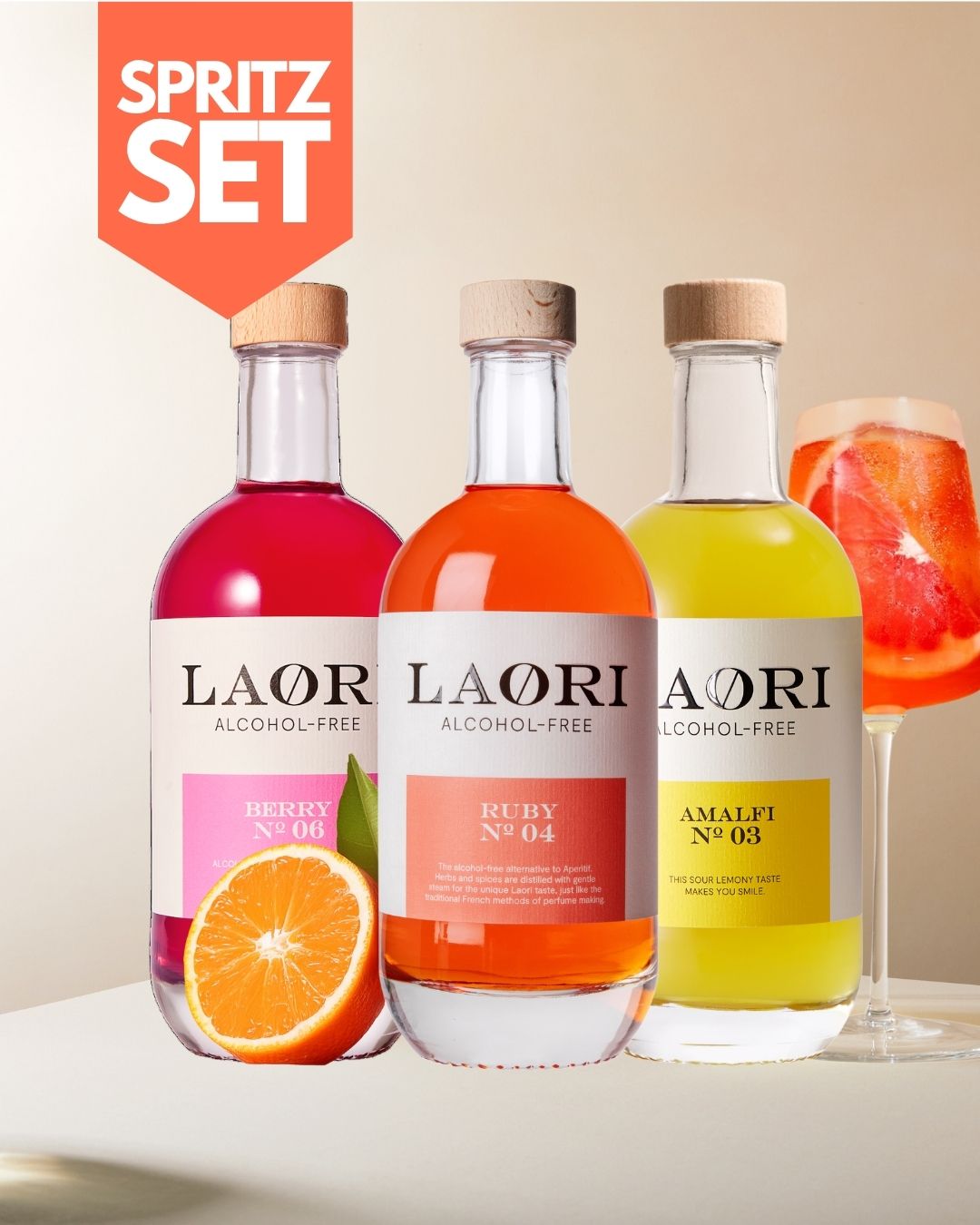
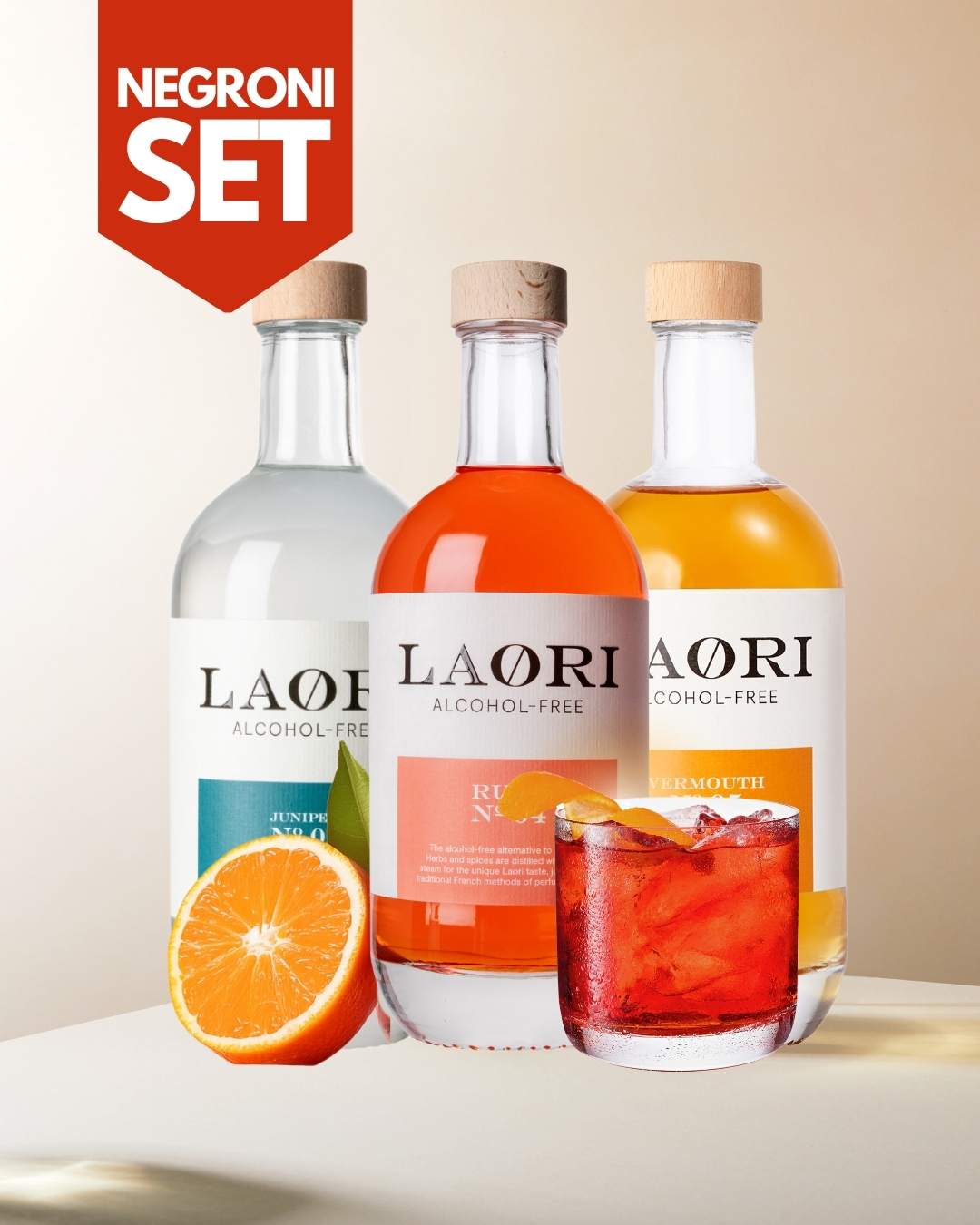
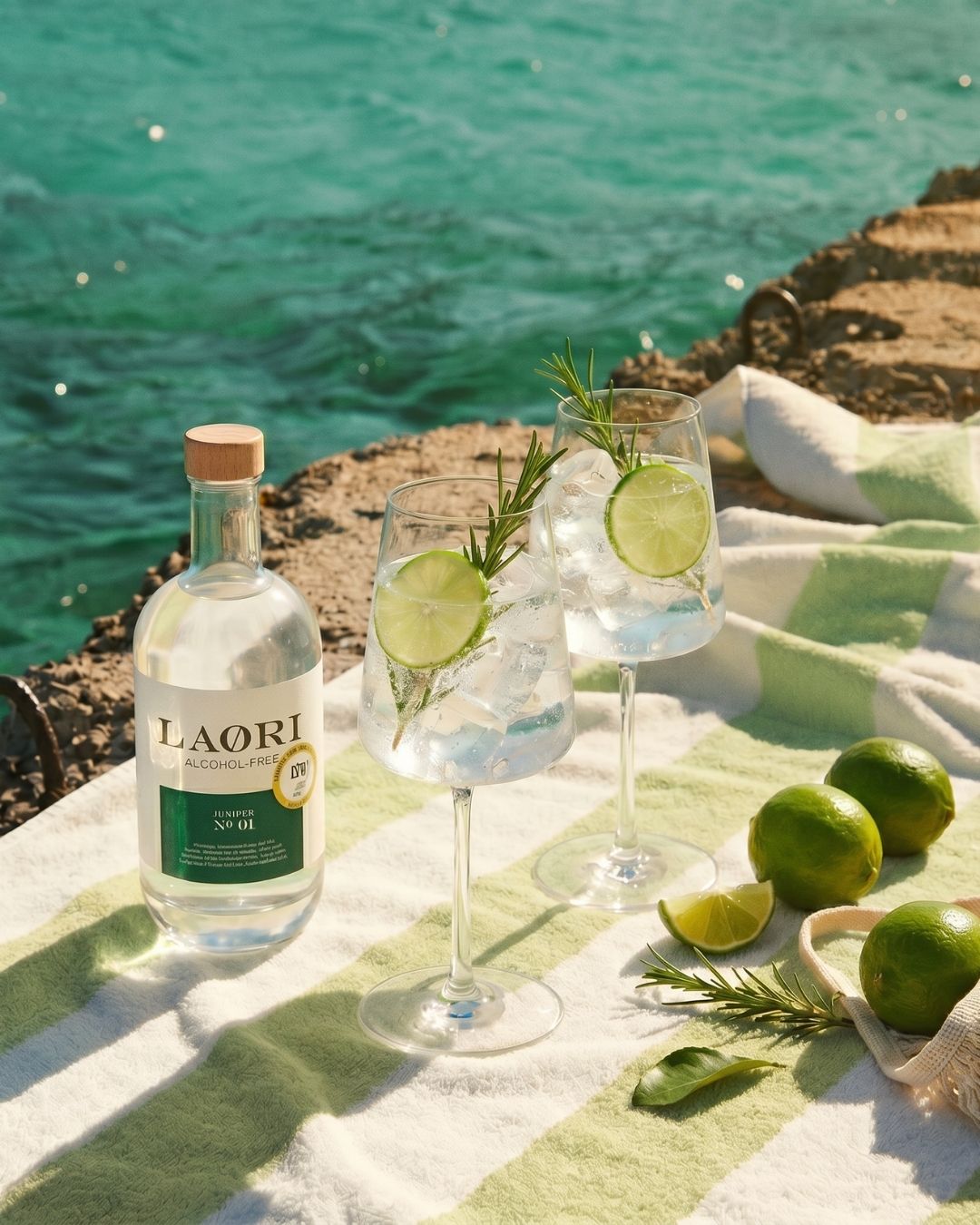
Laori It is legally alcohol-free and contains less than 0.3% alcohol. Because of this innovative manufacturing processes Laori is produced entirely without alcohol. For that final burst of freshness, we add... z.B. in our alcohol-free alternative to gin, we add some natural juniper flavoring, which contributes to the distinctive gin-like taste and creates the "residual alcohol".
Why does Laori still have a lower alcohol content than a non-alcoholic beer?
All Laori products are designed for mixing. They are not intended for drinking neat. If you drink a non-alcoholic Laori Spritz and mix it with tonic water, you dilute the alcohol content. As a result, a 200ml non-alcoholic Laori Spritz has an alcohol content of only about 0.06% by volume. Drinking two of these means you've consumed less alcohol than if you drank a bottle of non-alcoholic beer or apple juice.
Alcohol-free Laori & Tonic has an alcohol content of 0.06%
At Laori & The tonic with the alcohol-free alternative to Gin Laori Juniper No. 1 is similar. Here we have an alcohol content of 0.25% per 100ml.. As Laori & When mixed with tonic, you only have an alcohol content of 0.06%..
Fancy a drink now? Mix yourself one!
Non-alcoholic bestsellers
Bestseller